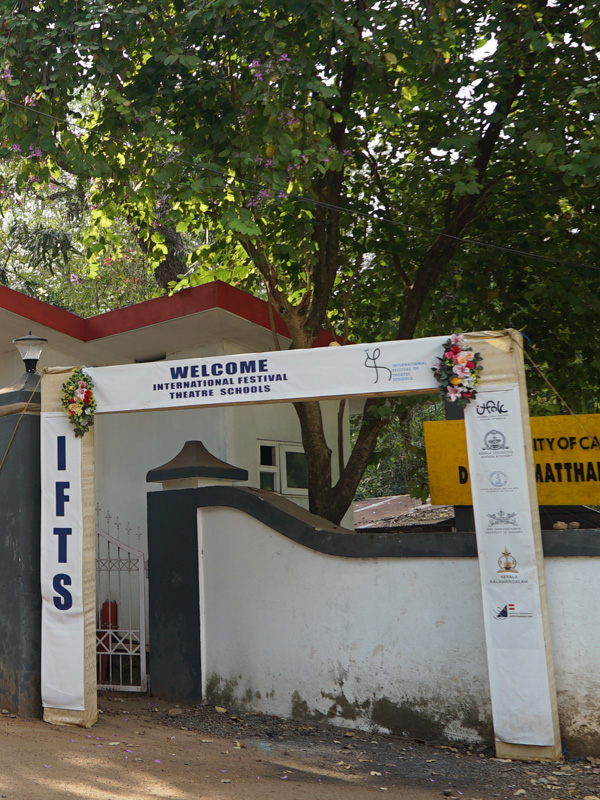
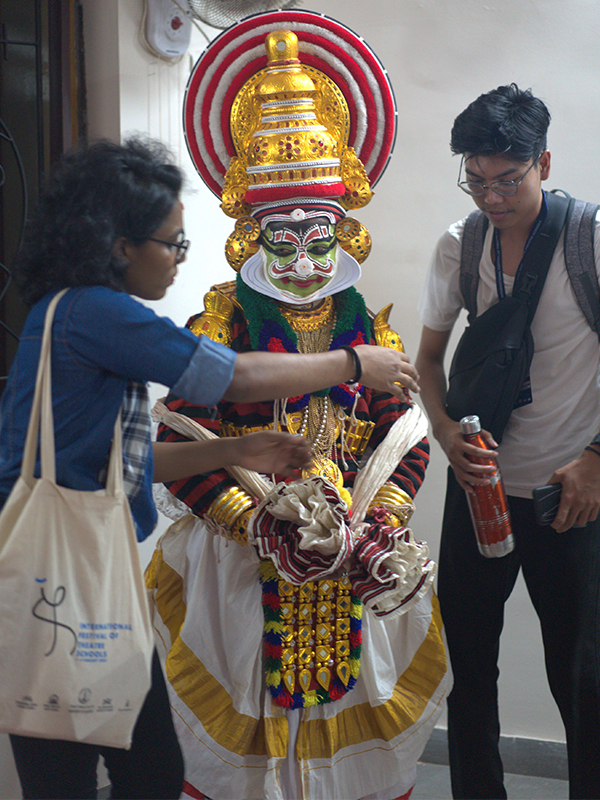
The International Festival of Theatre Schools 2026 (IFTS 2026) emerges as a unique confluence of pedagogy, performance, and well-being. Held under the theme "Carnival of Pedagogy: Theatre and Health," the festival reimagines the pedagogical potential of the performing arts in an era marked by physical vulnerability, mental distress, social fragmentation, and ecological uncertainty.
The term "carnival" evokes a space of playful inversion and embodied freedom, where hierarchies collapse, binaries dissolve, and new forms of knowledge emerge through celebration, ritual, and corporeal expression. In this spirit, IFTS 2026 offers a gathering where global theatre schools, practitioners, scholars, health professionals, and communities meet to rediscover theatre as both a pedagogical praxis and an agent of health, care, and community restoration.
Concept note
Health is widely understood as a state of complete physical, mental, and social well-being, rather than merely the absence of disease. Theatre and health have long shared a meaningful relationship: while theatre provides structured spaces for emotional expression and social connection, health practices focus on strengthening the body and mind. Theatre and health have long been companions. In ancient societies, dramatic performance and medical ritual often coexisted, both centred on the somatic body as the site of transformation. Today, theatre continues to serve not only as a mode of expression but also as a method of diagnosis and healing.
IFTS 2026 expands this historical dialogue to contemporary concerns: from the institutional corridors of modern medicine to the inclusive, community-driven models of applied theatre; from the rituals of Ayurveda and Yoga to performances rooted in trauma recovery and collective mourning. Theatre is repositioned as a living diagnostic tool, a mode of therapeutic storytelling, a space for ritual embodiment, and a pedagogy of empathy and agency.
Theatre Ecology emerges as a compelling perspective for our time: one that interrogates the role of performance in the face of planetary distress. This view examines whether theatre is complicit in environmental degradation or capable of ecological transformation. Does performance accelerate ecological breakdown, or can it cultivate new relationships of sustainability, interdependence, and eco-sanity?
This festival seeks to reframe education as a site of healing, and healing as a performative, embodied, and pedagogical process. IFTS 2026 responds to these questions through its Carnival of Pedagogy, reimagining the theatre school as a greenhouse of ideas, a site of ethical action, and a laboratory of aesthetic repair.
Background
Historically, performance has responded to illness, recovery, and human fragility with uncanny precision. Dramatic representations of hospital life, spiritual healing, and psychological distress have created genres that not only entertain but also interrogate the ethics and experience of medical systems.
Theatre has mirrored suffering, but it has also modelled resilience. The shared embodied nature of theatre and therapeutic practices is evident in how both rely on physical ritual: breath, gesture, proximity, silence, and repetition. Both offer forms of catharsis: theatre through aesthetic distance, and medicine through diagnosis and care.
In recent decades, theatre has taken on an even more activist role in health-related domains: from mental health interventions in schools to participatory theatre in ageing communities to simulation exercises in medical training. Healing from diseases themselves has expanded beyond biomedicine to include holistic traditions: systems that value balance, breath, emotional well-being, and narrative continuity.
Simultaneously, theatre confronts the challenge of performing in an ecologically threatened world. As environmental crises intensify, the theatre’s spatial, material, and technological dimensions examine their carbon impact and transformative potential. Theatres evolve into eco-conscious laboratories, responding to climate anxieties, rewilding ritual space, and seeking forms of sustainable storytelling.
IFTS 2026 acknowledges these developments and places the pedagogy of theatre at the very centre of discussions around health. This expanded vision of health includes not only the performer and spectator but also the planet and its systems of coexistence.
The Key Themes of The festival
Performance is increasingly used in healthcare training. Role-play, ensemble storytelling, and narrative medicine allow medical trainees to access emotional intelligence and embodied awareness.
The emotional toll of performance is real. Actors inhabiting traumatic roles can suffer psychological effects that blur the line between role and reality. Theatre pedagogy must now include strategies for self-care, emotional regulation, and trauma-informed rehearsal practices.
Traditional and Alternative medical systems, such as Ayurveda, Siddha, Unani, Homoeopathy, Yoga, and others from diverse regions across the globe, emphasise the significance of balance, movement, breath, various bodily systems, and the interconnectivity of these systems. These practices share a deep kinship with performers' somatic intelligence. From pranayama to marma chikitsa, these traditions offer embodied tools that can enhance actor training, voice work, and creative intuition, alongside homeopathy, yoga, and other traditional medical systems from various regions worldwide..
Theatre is a dynamic tool for health education. It breaks taboos, localizes knowledge, and evokes collective reflection. From community street theatre on HIV prevention to elder theatre exploring loneliness, these interventions are not just symbolic but often lead to concrete health outcomes. Participatory models create dialogic spaces that democratise both art and health.
Disability is not only a medical category but also a cultural, aesthetic, and performative reality. Disabled performers challenge conventional norms of beauty, virtuosity, and embodiment. Their work invites pedagogical frameworks that prioritise access, adaptation, and creative difference. Theatre becomes a radical site of inclusion.
Across the globe, hunger, especially in war-affected regions and impoverished nations, is not merely a symptom of scarcity but a profound threat to health and dignity. According to recent data, around 343 million people face severe food insecurity, with conflict-hit and low-income countries the hardest hit.
In places such as the Gaza Strip, famine-level conditions have been confirmed: more than half a million people are trapped in catastrophic levels of food insecurity, with the United Nations declaring famine in that region, one of the first instances in recent times outside Africa. The resulting acute malnutrition, widespread starvation, and breakdown of health services are unfolding as a “man-made disaster, a moral indictment … a failure of humanity itself,” in the words of the UN Secretary-General.
Simultaneously, in fragile economies, billions cannot afford a healthy diet; undernutrition, hidden hunger, and related illness are daily realities. The convergence of war, poverty, malnutrition, and disease underscores that theatre and culture must engage not only with stories of conflict but also with the urgent, lived realities of hunger and health.
The aesthetics of theatre, rooted in traditional art forms and evolving into contemporary fashion and design industries, play a pivotal role in shaping both performance and perception. This theme explores the performative and therapeutic functions of traditional make-up practices in ritual and folk theatre, and their reinvention within modern theatre’s costume design and fashion aesthetics. It acknowledges the transformative potential of character through costume and the embodied restoration of adornment and self-presentation. Additionally, this theme explores the intriguing blend between theatrical aesthetics and the global wellness and beauty industries, sectors that increasingly draw from theatrical techniques of colour, ritual, and body-care for rejuvenation and identity formation. This intersection positions theatre design as a living archive of cultural expression and a frontier of somatic, aesthetic, and emotional wellness.
It draws from the raw vitality of street theatre, activist performance, spoken-word protests, and mobile digital art shared in real time. These performances are not marginal—they are central to our understanding of health, community, and public pedagogy. IFTS 2026 engages with these living archives to expand the theatre school’s role as a public ally, a listening body, and a responsive witness. It calls on institutions to break down the elitist codes of theatre and forge pathways to engage with communities historically excluded from formal arts education. This is a theatre not merely for the people, but with them, among them, and made of them, recognising that every material, everybody, and every voice on this planet has pedagogical and aesthetic value in the carnival of survival and care.
In the cultural landscape of Kerala, performance art continues to thrive as a living tradition intricately bound with health, ritual, and ecological awareness. Traditional forms like Theyyam, Koodiyattam, and Padayani embody complex choreographies of embodiment and purification, where performance is not merely symbolic, but an act of healing that connects the body to the cosmos, the performer to the deity, and the stage to the soil. Yet contemporary Kerala also witnesses a burgeoning experimentation in time-based arts that transcend conventional proscenium spaces. IFTS 2026 aims to bridge this continuum by embracing performance forms that engage audiences through immersive, live presentations, blending circus theatre, physical theatre, vertical choreography, craft practices, music, and even food. These are not only artistic expressions, but embodied negotiations with the terrain, involving backstage crews, cooks, designers, riggers, and technicians whose labour renders space performative. Such performances take shape in spaces cohabited by birds, insects, trees, and monsoon winds, reminding us that every stage is an ecosystem. This theme emphasises the importance of valuing the often-invisible dimensions of performance, including endurance, craftsmanship, spatial negotiation, and relational aesthetics. Here, performance is redefined not just as an event, but as an etho, one that affirms life, community, and the subtle intelligence of place.
In a world marked by climate breakdown, theatre confronts its complicity and its power. Can performances reduce their ecological footprint? Can scenography evolve toward biodegradability and reuse? Are digital and virtual performance platforms reducing environmental impact or accelerating consumption? This theme explores the ethics of theatrical production, the potential of AI in performance making, and how theatre can cultivate ecological sensibility. It also considers whether performance itself, its labour, its repetition, its desire for presence, is part of a wider twenty-first-century addiction to spectacle. Yet, within this paradox, theatre may still hold a space for eco-critical reflection, ritual mourning, and the cultivation of planetary care.
In an age of biomedical innovation and hyper-mediation, the theatrical body is increasingly encountered not as a unified whole but as a site of modification, mediation, and technological imagination. This theme explores the philosophical and performative implications of the mutilated body, prosthetic enhancements, bio-engineered limbs, and bionic interfaces. Whether through necessity or desire, such corporeal transformations challenge traditional aesthetics and introduce new dramaturgies of resilience, agency, and identity. At the same time, traditional theatres rooted in ecological knowledge have long understood the body as an extension of the natural world, organic, cyclical, and mythic. As contemporary technologies, such as nanobiotechnology, alter the very fabric of medical intervention, and social media culture reconfigures performance through curated virtual selves, the stage becomes a battleground between the natural and the artificial. How might bio mimicry, designing technologies modelled on nature, offer pathways back to ecological wisdom? How does a body augmented by machines navigate performance ethics, digital intimacy, and environmental accountability? IFTS 2026 investigates these critical questions at the intersection of posthuman embodiment, theatrical tradition, and future pedagogies.
Festival Format
• Main Stage Productions (Institutional Performances)
• Site-Specific and Ritual Performances
• Devised Theatre Labs
• Master classes with Traditional Healers, Ecological Designers, Theatre Technologists and Theatre Practitioners.
• Research Paper Presentations and Round Tables
• Mental Health and Wellness Workshops for Students and Faculty
• Collaborative Installations Integrating Theatre and Healing Spaces
• Interactive Exhibitions on Embodied and Ecological Pedagogies
• Public Lectures and Demonstrations on Alternative Healing Systems, Digital Theatre, and AI in Performance
• A multi-volume festival compendium titled “Carnival of Pedagogy: Global Dialogues on Theatre, Health, and Ecology,” compiling scholarly essays, reflections, performance texts, and visual archives from the festival
• An open-access digital repository documenting interdisciplinary and intercultural practices, from ritual restoration to tech-integrated performance, featuring contributions from theatre schools, grassroots artists, street performers, and health practitioners worldwide.
• Launch of the IFTS Transcultural Coalition for Theatre, Ecology, and Health, a global collaborative network fostering long-term exchange between artists, educators, medical practitioners, technologists, and community leaders.
• A special research dossier on “The Posthuman and the Street: Prosthetic Bodies, Migrant Performance, and Democratizing Theatre,” developed in collaboration with human rights organizations and urban performance collectives.
• A sustainable scenography and design manual exploring ethical costume practices, prosthetic aesthetics, make-up traditions, and contemporary fashion narratives rooted in cultural wellness and beauty therapy.
• A policy-oriented White Paper proposing curricular reforms for theatre schools that centre ecological literacy, embodied pedagogy, inclusive health practices, and access for underrepresented communities.
• Performance-as-research productions exploring time-based and site-specific forms such as vertical theatre, circus arts, culinary performance, craft practices, and rural ritual enactments, culminating in mobile presentations across localities.
• Festival documentation in immersive formats, including VR experiences, digital archives, and AI-curated storytelling, captures not just performances but also the behind-the-scenes labor and terrain-specific relationships of each work.
• Decentralized regional laboratories across India and internationally to replicate, adapt, and evolve the IFTS pedagogical model in partnership with community theatres, street art movements, and cultural hubs.
• A community engagement toolkit titled “From Streets to Stages: Inclusive Theatre for All,” designed for educators, NGOs, municipal leaders, and artists working with migrant populations, displaced communities, and informal sectors.
• Long-term collaborative initiatives with academic institutions, cultural organizations, and CSR bodies to sustain research, mobility programs, wellness workshops, and artistic fellowships that amplify the festival’s vision.
• A Closing Charter of Intent, signed by participating schools, organizations, and supporters, committing to the values of democratic education, health-based theatre practices, and eco-conscious performance for a planetary future.
IFTS 2026 invites the generous support of corporate CSR initiatives, educational trusts, philanthropic organizations, cultural foundations, and entrepreneurial patrons. In alignment with national and global development goals in education, health, sustainability, and social equity, the festival provides tangible and lasting impacts through:
• Visibility and branding across all festival platforms, including print, digital, installations, and live events, linked directly to specific initiatives such as mental health awareness, ecological innovation, or community theatre outreach
• Recognition in the Festival Compendium, Research Anthology, and White Paper circulated to global academic and policy institutions.
• Opportunities to co-create or sponsor time-based installations, rural labs, wellness zones, or digital stages that reflect the values and mission of sponsoring bodies.
• Participation in high-profile networking events and donor assemblies with national and international cultural leaders, scholars, and government representatives.
• Invitations to immersive previews, VR showcases, backstage experiences, and curated festival tours.
• Long-term association in the IFTS Transcultural Coalition for Theatre, Ecology, and Health, offering year-round engagement, research collaborations, and educational development.
• Customized impact reports detailing the reach and outcomes of sponsored activities, demonstrating clear value alignment with CSR priorities.
• Capacity-building and training programs co-developed with partners to benefit youth, marginalized communities, and aspiring theatre practitioners.
• Acknowledgement through the “Partners in Pedagogy and Health” honor roll presented at the festival’s official closing ceremony.
By investing in IFTS 2026, our partners play a pivotal role in empowering inclusive education, promoting mental and ecological well-being, and reimagining theatre as a transformative civic and global force.
conclusion
IFTS 2026 is a call to return to the body, not as an object of scrutiny, but as a source of knowledge, empathy, and transformation. In a time when the world reels from medical, environmental, and emotional crises, this carnival of pedagogy will center not only on the role of the teacher or the artist but also on that of the healer, the listener, and the collective witness.
In the liminal space between ritual and rehearsal, stage and clinic, memory and movement, screen and forest, we invite the global community to celebrate the healing theatre, the pedagogical body, and the festival of care.
We wanted IFTS 2026 to be not merely a festival—it is a living classroom, a civic theatre, and an open archive of global healing practices. It embodies a radical vision where every voice counts, every performance heals, and every act of learning is grounded in care, dignity, and shared futures.
For those who invest in it, be it through CSR, philanthropy, or education, that is not a sponsorship alone, but a partnership in reimagining the world through art and health. We invite you to join hands with us to create a carnival where pedagogy dances with compassion, where the streets speak with the same eloquence as the stage, or vice versa, where the stage is as chaotic as the street, and where performance becomes a pathway to planetary wellbeing.
Let the carnival begin.